Many people notice that a toothache seems to get worse after they lie down. A throbbing tooth at 2 a.m. is miserable, and it is usually a sign that something needs a dentist’s attention, even if the pain settles by morning.
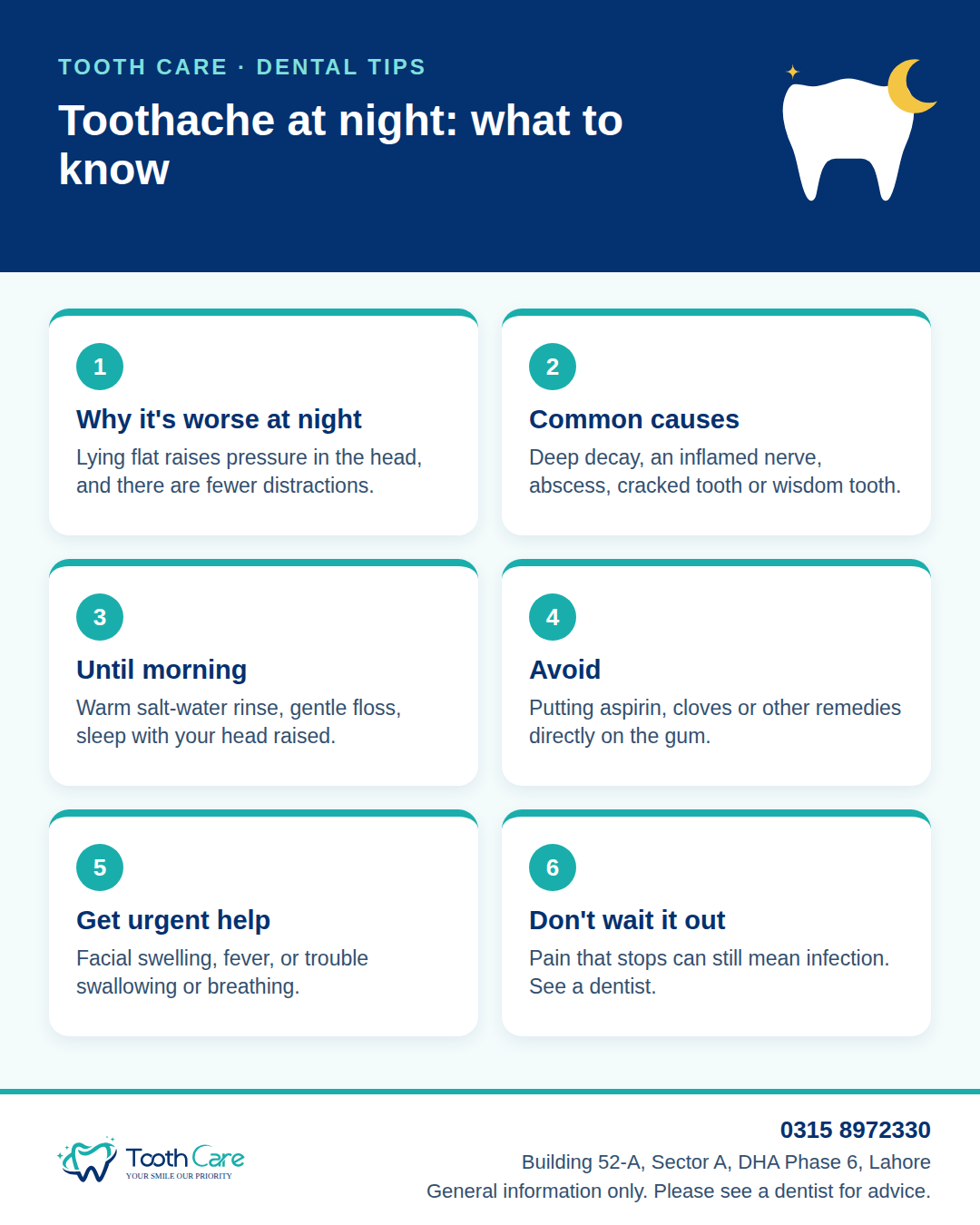
Why toothache can feel worse at night
- Lying flat increases blood flow to the head, which can raise pressure around an inflamed tooth.
- Fewer distractions: during the day you are busy; at night the pain gets all your attention.
- Clenching or grinding while asleep can aggravate a sore or cracked tooth.
Common causes
- Tooth decay (cavity) that has reached the inner layers of the tooth. Early decay often causes sensitivity to sweet or cold; deeper decay can cause lingering or throbbing pain.
- Inflamed or infected pulp (the nerve inside the tooth). Pain that lasts long after hot or cold, or that wakes you up, can mean the pulp is involved.
- Dental abscess: a collection of pus from infection. It may cause swelling, a bad taste, or pain when biting.
- Cracked tooth: sharp pain when biting or releasing, often hard to pin down to one tooth.
- Gum problems around a tooth, including food trapped under the gum.
- Wisdom tooth pressure or gum inflammation around a partly erupted wisdom tooth.
- Sinus congestion: upper back teeth can ache during a cold or sinus infection.
What you can do until you see a dentist
- Rinse with warm salt water to keep the area clean.
- Gently floss around the tooth in case food is stuck.
- Sleep with your head slightly raised on an extra pillow.
- A cold compress on the cheek (not directly on the tooth) can ease swelling.
- Over-the-counter painkillers may help; follow the instructions on the pack and ask a pharmacist or doctor if you have any medical conditions or take other medicines.
- Do not place aspirin, cloves or other remedies directly on the gum: this can burn the tissue.
When to get urgent help
Contact a dentist the same day, or go to a hospital emergency department, if you have:
- swelling of the face, jaw or under the tongue
- fever with tooth pain
- difficulty swallowing, breathing or opening your mouth
- pain after a knock or injury to the mouth
Facial swelling with fever or difficulty swallowing can be serious and should not wait until the next day.
Why you shouldn’t wait for the pain to stop
Pain from an infected tooth can come and go, and sometimes stops when the nerve dies, but the infection remains. Finding the cause early often means simpler treatment. Depending on what the dentist finds, options can range from a filling to root canal treatment.
If you are in pain in Lahore, our dental emergency service can help you get seen quickly, or you can book an appointment.
This article is general information, not medical advice. Everyone’s mouth is different: please see a qualified (PMDC-registered) dentist for an examination and advice about your own teeth.