Losing a tooth affects chewing, speech and confidence. A gap can also let neighbouring teeth tilt and the opposite tooth drift. There are three main ways to replace missing teeth, and each has its place.
1. Dental bridge
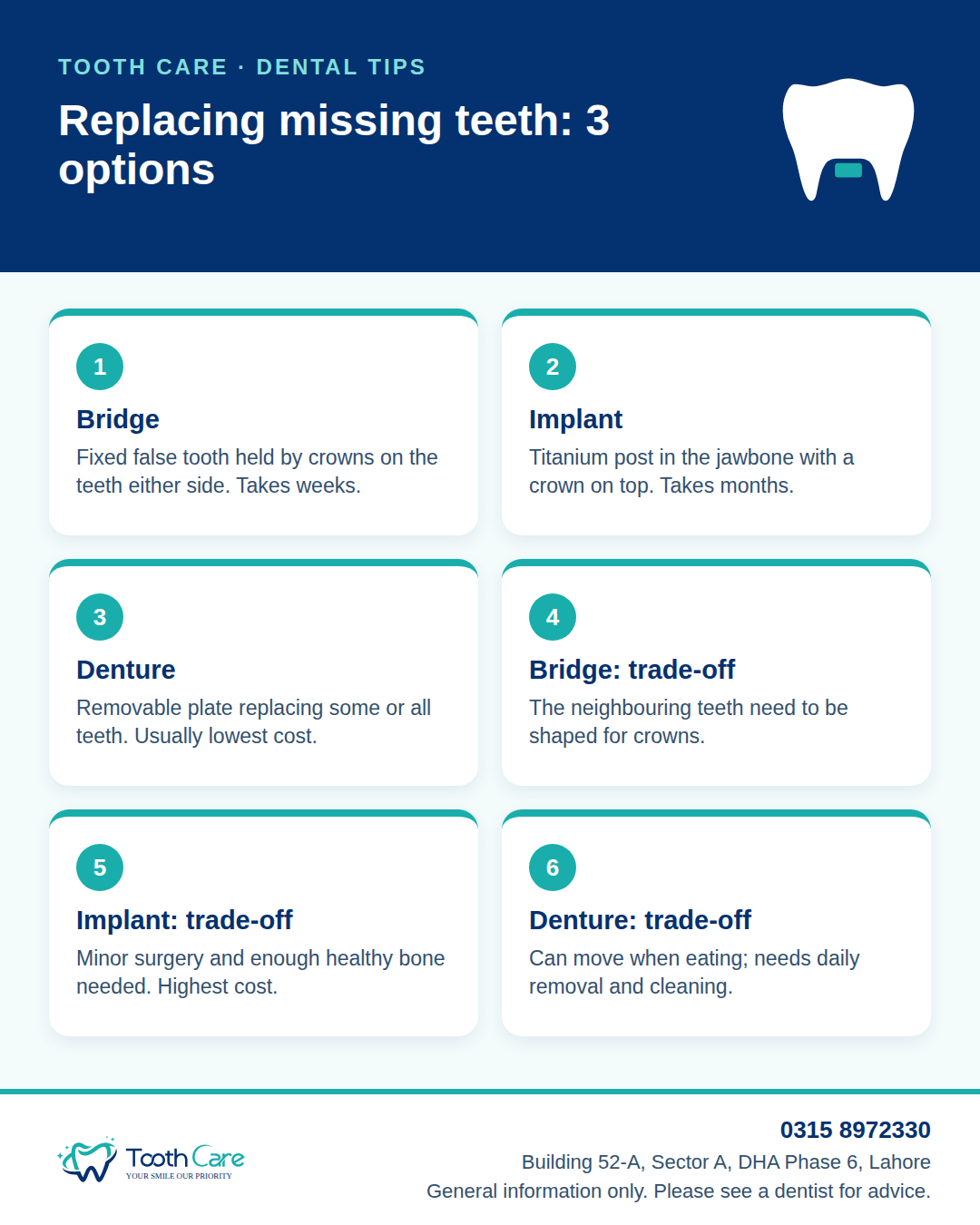
A bridge fills a gap by attaching a false tooth to crowns on the teeth either side.
- Good for: one or a few missing teeth in a row, with strong teeth next to the gap.
- Pros: fixed in place, feels natural, usually completed in two or three visits over a few weeks.
- Cons: the neighbouring teeth have to be shaped for crowns; cleaning under the bridge needs special floss or brushes.
2. Dental implant
An implant is a small titanium (or ceramic) post placed in the jawbone. After it bonds with the bone, a crown is fitted on top.
- Good for: single or multiple missing teeth when there is enough healthy bone, and the person is in reasonable general health.
- Pros: doesn’t involve the neighbouring teeth; helps preserve bone where the tooth was.
- Cons: involves minor surgery; healing usually takes a few months before the final crown; generally the most expensive option. Smoking and uncontrolled diabetes can reduce success.
3. Dentures
Dentures are removable replacements: partial dentures replace some teeth, complete dentures replace all teeth in a jaw.
- Good for: several missing teeth, or when other options aren’t suitable or affordable.
- Pros: usually the least expensive, no surgery, relatively quick to make.
- Cons: can feel bulky at first; may move when eating; need removing and cleaning daily; may need relining or replacement as the gums change over time. Implants can be used to hold dentures more firmly.
Quick comparison
| Bridge | Implant | Denture | |
|---|---|---|---|
| Fixed or removable | Fixed | Fixed | Removable |
| Affects neighbouring teeth | Yes | No | Partial dentures may clip on |
| Surgery | No | Yes | No |
| Typical timeline | Weeks | Months | Weeks |
| Relative cost | Medium | Highest | Lowest |
How to choose
The best option depends on how many teeth are missing, the health of the remaining teeth and gums, the amount of bone, your general health, and your budget. Your dentist will usually take X-rays and may suggest more than one option. Ask about the long-term upkeep of each, not just the upfront cost.
Caring for any replacement
Whatever you choose, keep brushing twice a day, clean between teeth or around the replacement daily, and keep up regular checkups. Gum disease and decay in the remaining teeth are the most common reasons replacements run into trouble.
See how we restore teeth with crowns and bridges at Tooth Care, or book an appointment to discuss your options.
This article is general information, not medical advice. Everyone’s mouth is different: please see a qualified (PMDC-registered) dentist for an examination and advice about your own teeth.