
Paan, gutka, mainpuri, naswar and chhalia are part of daily life for many people in Pakistan. They are often seen as harmless habits, but they have well-documented effects on the mouth, some of them serious.
What’s in them
- Chhalia (areca nut / betel nut) is the base of paan, gutka and mainpuri. The World Health Organization’s cancer agency (IARC) classifies areca nut as a cause of cancer in humans, even without tobacco.
- Gutka and mainpuri combine areca nut with tobacco, lime and flavourings.
- Naswar is a moist smokeless tobacco placed under the lip or tongue.
- Paan may contain areca nut, lime (choona), katha and often tobacco.
Effects on teeth
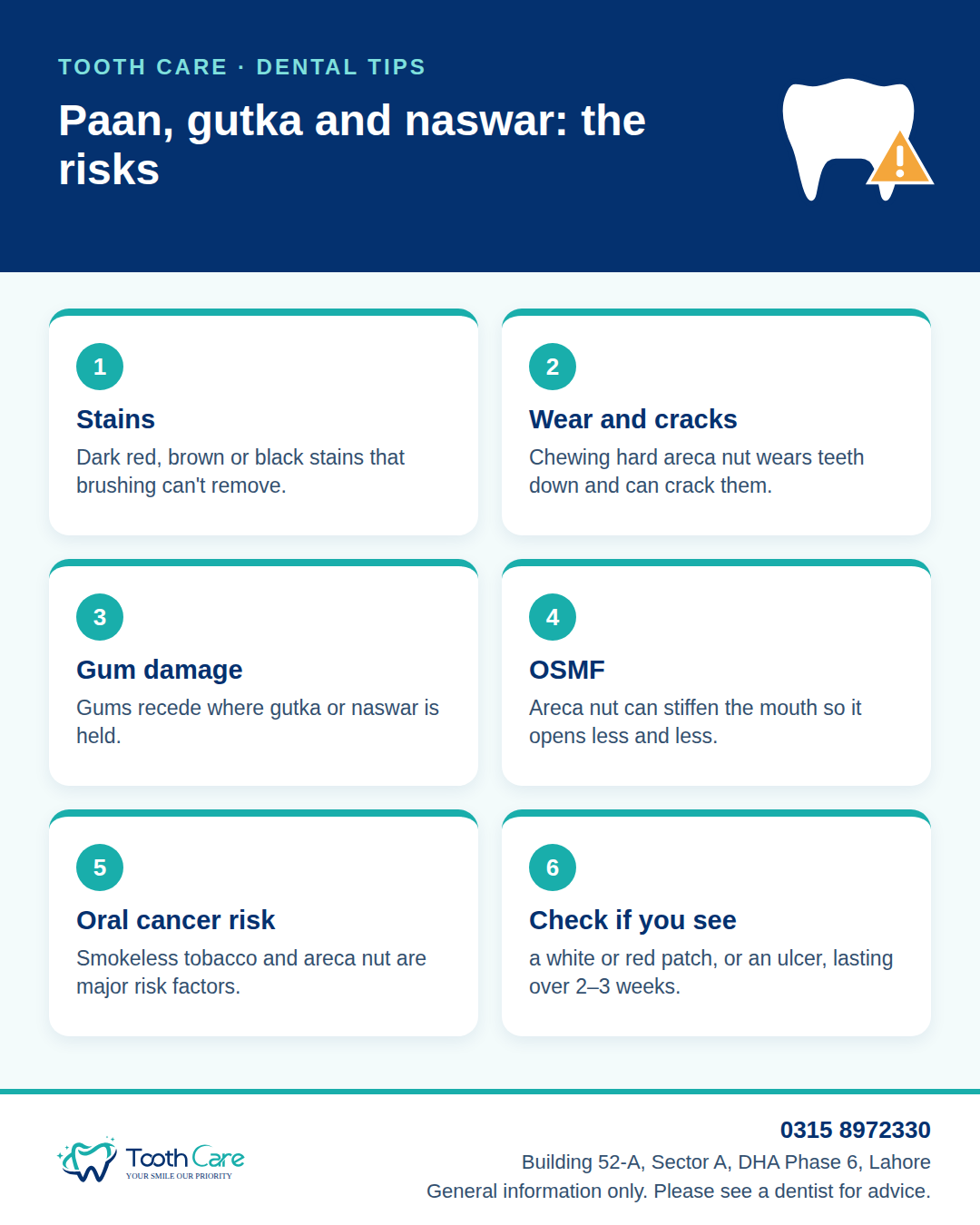
- Staining: dark red, brown or black stains that brushing can’t remove.
- Wear: chewing hard areca nut over years can grind teeth down and cause sensitivity.
- Cracks and fractures from biting hard nut pieces.
- Decay from sweetened products like sweet supari.
Effects on gums
- Gum recession at the spot where naswar or gutka is held, exposing the roots.
- Higher risk of gum disease and tooth loss.
- Tobacco reduces blood flow to the gums, which can hide bleeding while disease progresses.
Serious conditions to know about
- Oral submucous fibrosis (OSMF): linked mainly to areca nut, it causes the inside of the mouth to become stiff with tight bands, gradually limiting how wide the mouth can open. A burning feeling with spicy food is an early sign.
- Leukoplakia and erythroplakia: white or red patches that don’t rub off. Some can become cancerous.
- Oral cancer: smokeless tobacco and areca nut use are major risk factors for mouth cancer, which is among the most common cancers in Pakistan.
Warning signs: see a dentist or doctor if you notice
- a white or red patch in the mouth that doesn’t go away within two weeks
- a mouth ulcer that hasn’t healed after two to three weeks
- a lump or thickening in the cheek, gum or tongue
- difficulty opening your mouth fully, or burning with spicy food
- unexplained bleeding or numbness in the mouth
Most of these turn out not to be cancer, but early checking makes a big difference if it is.
Cutting down and quitting
Quitting is hard, and support helps. Talk to your doctor about options, tell family and friends, and avoid situations where you usually chew. The mouth often improves after stopping, and risks reduce over time.
Regular checks matter
If you use any of these products, or have in the past, tell your dentist. A routine dental checkup includes looking at the cheeks, tongue, gums and floor of the mouth, not just the teeth. Stains can often be reduced with professional cleaning, and our cosmetic dentistry page explains other options.
Book a checkup at Tooth Care, DHA Lahore.
This article is general information, not medical advice. Everyone’s mouth is different: please see a qualified (PMDC-registered) dentist for an examination and advice about your own teeth.